

Pug dogs are often described as multum in parvo (“much in little”) or being “a whole lotta dog” which basically sums up the pug’s amazingly BIG personality despite its small size.
Pugs have an endearing appearance, they are prone to very comical expressions, and an even temperament. They are also highly intelligent which makes it’s easy to see why pugs are a popular choice for a family pet or a single person looking for a charming companion.
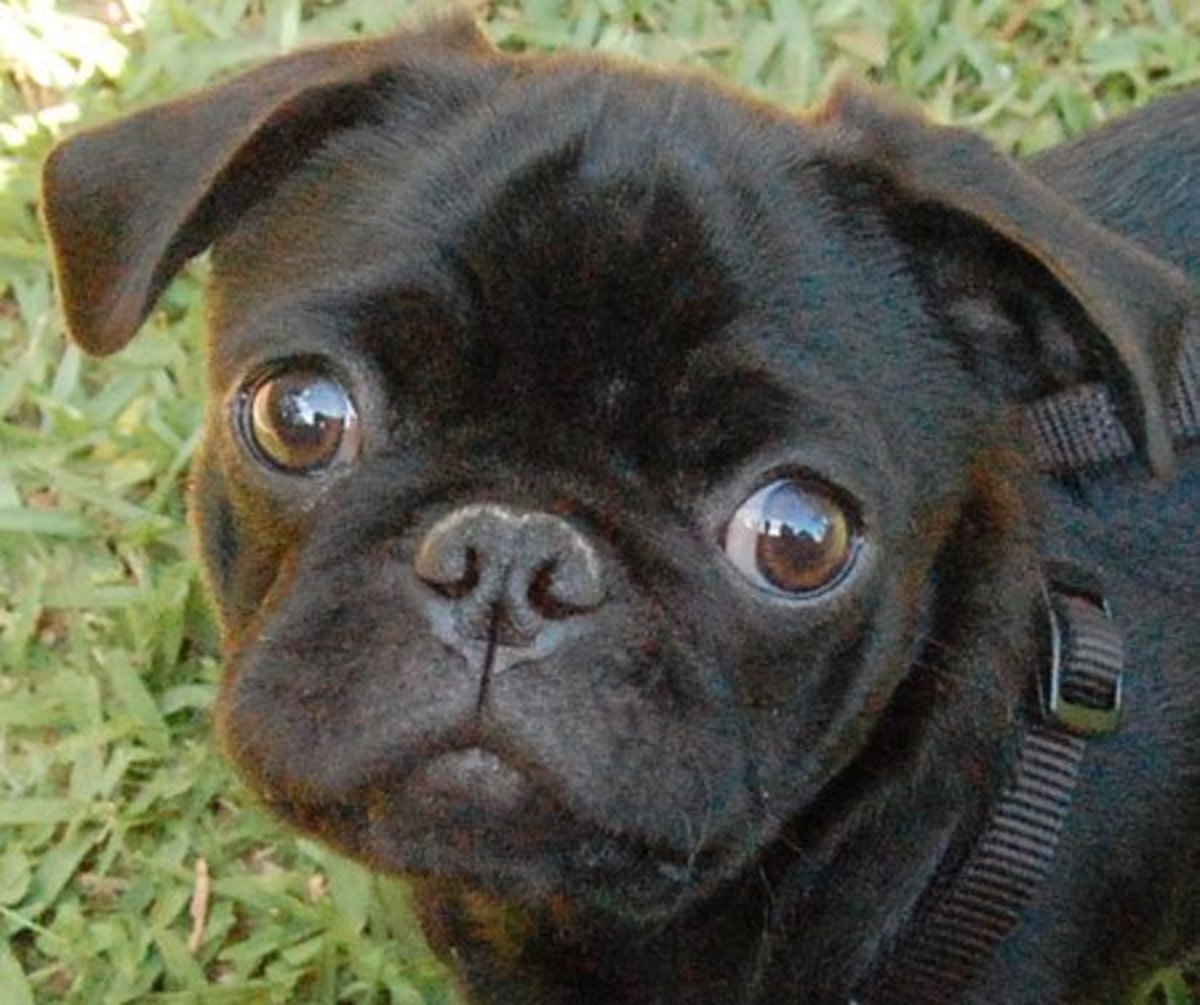
Pugs are best suited to people who have a lot of time and love to give as the breed thrives on human affection. Pugs are exuberant, alert and show great affection for their owners and everyone else! They love being cuddled and patted and can sometimes get jealous or troubled when your affections are devoted to someone else.
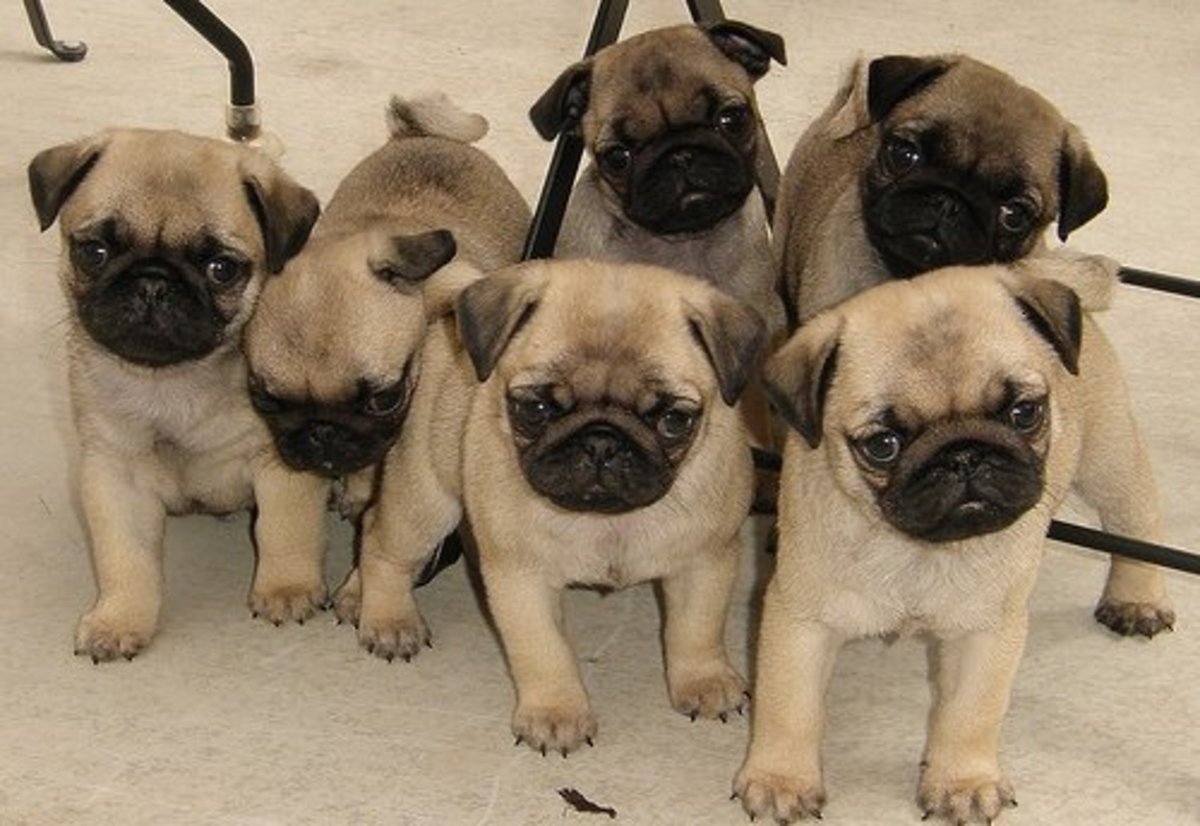
Pugs are ideal for families with children, as they are generally patient with children and love to play games. The shape of the mouth prevents them from biting efficiently and this makes them reasonably harmless.
Pugs are among the most gentle and passive of all breeds. They will tolerate the prodding of a child, are not known to nip or bite and are quite protective of the family and home. However, they are quite fragile, especially as puppies, and should be looked after and supervised when playing.
On average, Pugs live about 12 years, but they have been known to live well beyond their average life span with proper care and nutrition.
History
While experts agrees that this is one of the world’s oldest breeds, no one is sure exactly how old. Some claim that pugs were short haired versions of the Pekingese and bred as companions for the Chinese sovereigns during the Shang Dynasty (1600-1046 B.C.), They were known as “Lo-Chiang-Sze” or “Foo” (looking a little like the ceramic foo dogs or guardian lions, with their prominent bulging eyes)
Ancient Chinese documents state that pug-like dogs existed in China around 700BC at the time of Confucius. Confucius also makes reference in his writings to a type of “short mouthed dog”.
Others believe that pugs are actually a small kind of French Mastiff or Bulldog.
During the 16th century pugs were brought to Europe by the Dutch East India Company. They became the dog of aristocrats and royalty and were considered to have a high status amongst dog breeds.The pug became the official dog of the House of Orange in Holland after saving the life of William the Silent, Prince of Orange, in 1572, when the Spaniards and the Dutch were at war. The pug alerted William to the approaching Spaniards and he was able to escape unharmed.

The Pug was also reportedly a favourite in France during Napoleonic times. Napoleon Bonaparte’s wife, Joséphine had her pug named Fortune which carried hidden messages to her family while she was confined at Les Carmes prison. It is alleged that Fortune bit Napoleon as he climbed into bed on the couple’s wedding night.
In the art work of the 18th and 19th centuries, pugs usually appeared with longer legs and noses than modern day pugs and most displayed cropped ears. The modern pug’s appearance probably appeared after 1860 when a new wave of pugs were imported directly from China. These pugs had shorter legs and the modern style pug nose. Ear cropping was outlawed in 1895.
Pugs arrived in western countries during the nineteenth century. Pugs were one of the earliest pure breed dogs to be kept in Australia (the Agricultural Society of NSW records two pugs being exhibited in 1870) and the American Kennel Club recognized the breed in 1885.
Pugs Are Fun To Have Around
Being attention seekers, pugs love to play games with you, they will race and jump around the house and happily “dress up” and parade around the place, hence the name “clowns of the animal kingdom”.
However, the energy level of a pug can vary greatly.They can be both energetic and very laid-back and their mood will change depending on their surroundings.

While in a high-energy situation, these dogs will be very active and playful. Pugs are very curious and love to explore new surroundings and discover new things. However,In a more subdued setting, pugs will tend to be more mellow. They love to take long naps and a typical pug will spend a great deal of the day sleeping, up to 14 hours a day! This can be a great benefit to people who work and have to leave their pug at home during the day. Pugs thrive on attention so they will be happy to see you when you arrive home but they will usually be content when left alone.

Pugs Are Stubborn but Highly Intelligent
Pugs are known to be very stubborn at times and can appear to have a mind of their own. I have seen many people lamenting the fact that their pug dog is “so needy” and demanding (not unlike a small child). Just remember that pugs are bred as toy dogs or companion dogs who thrive on attention and love to be around people. Just like a small child, pugs can become fixated with “wanting” something and they can make a fuss until they get it! However, don’t despair, pugs are intelligent dogs so with patience and firm obedience training this will not be a problem forever.

Like most puppies and dogs, pugs do like to chew things around the house, which can be a problem.
A word of warning: Never leave your lap top computer sitting on the couch open because your adorable pug is likely to chew all the keys off the keyboard and you will end up with a costly repair bill to replace them all (this is a true story!). The problem of chewing can be easily solved by giving your pug plenty of chew toys and storing precious items safely out of view!

Luckily, pugs are very intelligent and they are fast learners when it comes to things that interest or excite them. For example, figuring out how to best get your attention or how get to the food left out on the bench. Their intelligence goes hand in hand with their stubbornness, so you will need to be patient. With enough firm training these dogs will know what items are off-limits to them and will grow into responsible pets.