

Therapy dogs use their social instincts and learned social skills to bring people emotional benefits and sensory interventions. Where many f amilies find there is limited, often unsatisfactory help for their autistic child (or young adult), the successful use of therapy dogs provides them with much-needed and immediate therapeutic answers. Dogs love patterns, structure, repetition, and sequences, which works naturally well with an autistic mind.
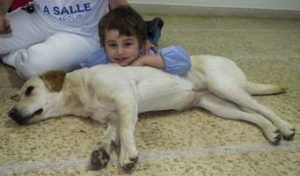
A therapy dog’s main function is to help people emotionally, though physical benefits can result by boosting morale for physical therapy and encouraging self-care tasks. (It is important to understand a therapy dog is not an assistance dog or service dog. These dogs assist a person to function with a physical disability and also sit in a different legal category).
Here are the top 10 reasons therapy dogs make excellent companions:
1. Engagement
The presence of a therapy dog will motivate a child to join others and increase focus. The therapy dog will also attract their attention and help divert attention away from negative behavior.
2. Calm during meltdowns
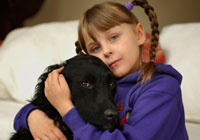
Therapy dogs are taught to respond  to a child going into meltdown by licking and leaning on the child, calming and soothing him/her with kindness.
3. ‘Sensory’ games
A therapy dog is taught to play a number of games that assist a healthy daily ‘sensory diet.’ The games promote deep pressure, proprioception, vestibular, fine motor skills, and speech activities. Examples include wrestling, Hide and Seek, Tug of War, massage, and ‘High 5.’
4. Reassurance during anxiety
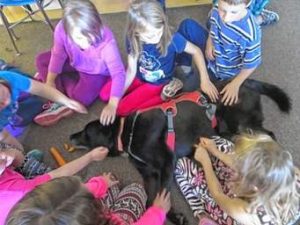
A therapy dog is taught to lean and lie over the children, applying deep pressure to sooth anxieties. This same technique can also help achieve more restful and better quality sleep.

5. Confidence
A therapy dog is particularly helpful in encouraging the child to go outside, get involved in a game, or spend time sitting or standing still.

6. Cognitive and emotional health
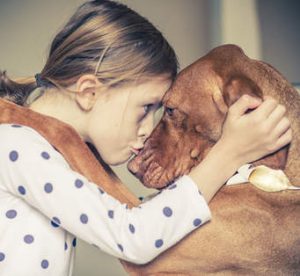
A therapy dog requires loving care, and so it can promote positive feelings of love and nurture from the child. These canines are taught to enjoy being touched, cuddled, and given huge, tight squeezes from children.
7. Vocal skills
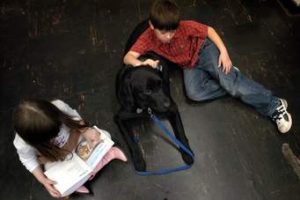
Perhaps the most significant and obvious advantage is the impact a therapy dog can have in the promotion of speech. Nonverbal children and elective mutes will increase speech when the therapy dog is present.
8. Development of overall skills
Once sensory issues are reduced by working with the therapy dog, then the development of further skills will increase.

9. Companionship
One of the most satisfying benefits of a therapy dog is the dog’s ability to bond quickly with a child. In doing s o, the child makes a friend, and the dog will start to fill the void or feelings of loneliness without judging.
10. Life-changing
The combination of benefits is often referred to as life changing, allowing  the child to improve his/her quality of life, health, and the connection with the world.