

SPECIAL DOGS ARE HELPING CHILDREN WITH SPECIAL NEEDS (PET THERAPY) AND BENEFITS ASSOCIATIONS
Pet therapy is a guided interaction between a person and a trained animal. It also involves the animal’s handler. The purpose of pet therapy is to help someone recover from or cope with a health problem or mental disorder.
Dogs are most commonly used in pet therapy.
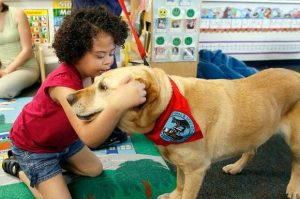
The dogs are now allowed in schools to help children with special needs feel more secure, happy, and in return more apt to learn, I knew this information would benefit many of our readers. For students with autism spectrum disorders (ASD), Asperger’s syndrome (AS), sensory processing disorder (SPD), social anxiety, Tourette’s syndrome, life threatening allergies, etc. going to school is a challenge. Getting them ready and willing to go is often a nightmare for the caregivers! Parents, teachers, and therapists should look into the possibility of introducing dogs in the mix of treatment and support.
The benefits of using a therapy dog:
- A Steady Gait: Properly trained therapy dogs are able to move forward at a steady pace that’s easily adjusted as the child speeds up or slows down. In other words, the dog will keep up with the child.

- Motivation: Studies have shown that therapy patients enjoy doing tasks that aren’t normally enjoyable (like physical therapy….which is hard work!) when they are doing t
 hings the animal enjoys. In other words, “Let’s go walk a cute dog today.”
 hings the animal enjoys. In other words, “Let’s go walk a cute dog today.”
- Increase Attention Span: Children can find it hard to maintain focus on a specific task for long periods of times.
 However, studies have shown than when therapy dogs are present children are more engaged and can stay focused on the task much longer.
 However, studies have shown than when therapy dogs are present children are more engaged and can stay focused on the task much longer.
- Increases Confidence: As a child starts to see improvements toward their therapy goals while using a therapy dog, there confidence goes up , which results in
 the child meeting more milestones and becoming stronger in existing areas.
 the child meeting more milestones and becoming stronger in existing areas.
- Reduces Anxiety and Fear: Working on a new goal can create fear and anxiety no matter how old (or young) a person
 is. The use of animals in therapy produce a calming effect, and helps the child feel more comfortable so that they can work on their therapy goals.
 is. The use of animals in therapy produce a calming effect, and helps the child feel more comfortable so that they can work on their therapy goals.
- Putting an end to Bullying: Bullying is a problem in so many classrooms, with children anxious about school for fear of taunting and abuse. But in some schools,
 dogs are making a difference in the fight against bullies. Through programs like Kansas City’s No More Bullies, volunteers and dogs visit schools to teach kids about compassion and fairness. Developers of the program report that kids can identify with animals, and with empathy for the dog, can better understand how classmates may feel. Jo Dean Hearn of No More Bullies shares, “it’s easy for them to transition when we ask them to consider how an animal feels (if ill treated) to how the kid sitting near them feels (if poorly treated).” The programs sure seem to work, with a long waiting list for No More Bullies. In a study of a similar program, Healing Species, it was found that violent behavior in participating students declined by 55%, and general aggression went down 62%.
 dogs are making a difference in the fight against bullies. Through programs like Kansas City’s No More Bullies, volunteers and dogs visit schools to teach kids about compassion and fairness. Developers of the program report that kids can identify with animals, and with empathy for the dog, can better understand how classmates may feel. Jo Dean Hearn of No More Bullies shares, “it’s easy for them to transition when we ask them to consider how an animal feels (if ill treated) to how the kid sitting near them feels (if poorly treated).” The programs sure seem to work, with a long waiting list for No More Bullies. In a study of a similar program, Healing Species, it was found that violent behavior in participating students declined by 55%, and general aggression went down 62%.
- Autism Service Dogs: Children with autism typically have trouble with concentration and interaction at
 school and beyond. With the help of a service dog, students may be able to increase their abilities and do better in the classroom.
 school and beyond. With the help of a service dog, students may be able to increase their abilities and do better in the classroom.
- Managing Behavioural Problems: Dogs help kids with behavior problems: Nine Ways How Special Dogs are Helping Children with Special Needs Behavior problems are serious in school, and as many as one in 10 children suffers from a behavior disorder bad enough to interfere with learning and development. Some schools are using dogs to improve behavior problems, promoting positive behavior in students. In a controlled study, students were found to have fewer disciplinary referrals than classrooms without animals. Students’ behavior improved toward teachers, and students also showed more confidence and responsibility. Additionally, parents reported that children seemed more interested in school as a result of having the animals around.
 behavior disorder bad enough to interfere with learning and development. Some schools are using dogs to improve behavior problems, promoting positive behavior in students. In a controlled study, students were found to have fewer disciplinary referrals than classrooms without animals. Students’ behavior improved toward teachers, and students also showed more confidence and responsibility. Additionally, parents reported that children seemed more interested in school as a result of having the animals around.
- Promoting Reading , It might seem a bit silly to read to a dog, but canine reading programs are doing wonders for young students. After all, a dog won’t judge or correct you.” With the Reading Education Assistance Dogs program, also known as READ, dogs are used to encourage struggling readers to
 practice reading aloud. With the presence of a “calm and well-trained dog,” students find social support and peer interaction. On top of spending time with a favorite therapy dog, students are offered incentives, including “pawtographed” books. In other programs reading to dogs is the incentive, allowing students to read to therapy dogs if they met their literacy goals.
 practice reading aloud. With the presence of a “calm and well-trained dog,” students find social support and peer interaction. On top of spending time with a favorite therapy dog, students are offered incentives, including “pawtographed” books. In other programs reading to dogs is the incentive, allowing students to read to therapy dogs if they met their literacy goals.
- Social Development: Dogs in school offer an opportunity for improving social development at nearly every stage, from elementary age children to teens. They are especially useful
 for teaching students social skills and responsibility. Specifically, schools are using dogs to help tweens build self esteem, learn about positive and negative reinforcement, responsibility, and boundaries. Older kids and teens use dogs to help communicate, teach kindness, and empower students through dog training programs.
 for teaching students social skills and responsibility. Specifically, schools are using dogs to help tweens build self esteem, learn about positive and negative reinforcement, responsibility, and boundaries. Older kids and teens use dogs to help communicate, teach kindness, and empower students through dog training programs.
- Teaching Responsibility: With a dog in the classroom, students have the opportunity to learn how to care for the animal.
 This includes walking, grooming, and feeding the dog, chores which can be distributed among the class. Trainers report that involving students in the daily care of classroom dogs is a positive experience, promoting their own daily care, like brushing their teeth at home. The students also learn about responsibility, caring, and sharing when helping each other take care of a dog at school.
 This includes walking, grooming, and feeding the dog, chores which can be distributed among the class. Trainers report that involving students in the daily care of classroom dogs is a positive experience, promoting their own daily care, like brushing their teeth at home. The students also learn about responsibility, caring, and sharing when helping each other take care of a dog at school.